

Kontiki Reisen only offers whale safaris from partners who uphold a code of conduct and ensure that encounters with the marine mammals are respectful and appropriate to the species. We also dissociate ourselves from whaling, which is unfortunately still practised in Iceland, Norway and the Faroe Islands. Under the «Agreement not to serve whale meat», our group tour partners commit to not serving whale meat.
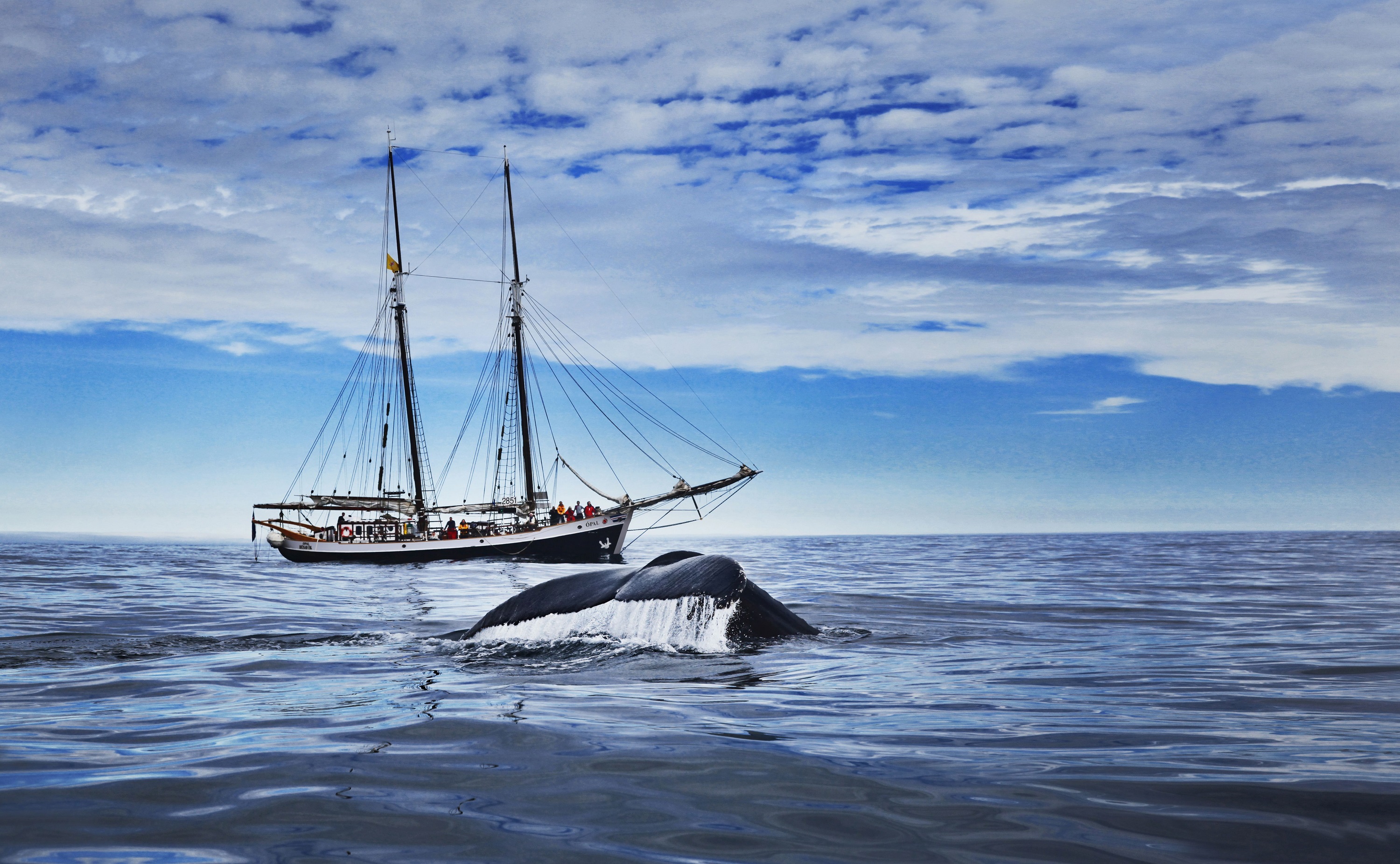
Whales are one of the mammals that conquered the oceans as a habitat some 50 million years ago. In literature, they have always been shrouded in mystery, and they continue to fascinate sailors and adventurers all over the world. Over the millennia, they have become the mammals most adapted to aquatic life, even giving birth to their young underwater. There is only one thing they still can’t do: breathe under water. Most whales migrate to tropical waters during the Arctic or Antarctic winter season, where they give birth to their offspring and then in spring return to the colder waters with their calves. The whales also move depending on where their food source in the form of shoals of herring and krill is located. In northern Norway, Iceland and farther north, there is a chance to observe these majestic animals all year round.
Our partner for the protection of the oceans
OceanCare is committed to protecting the oceans and their inhabitants worldwide. This Swiss organisation has been the UN Special Advisor on Marine Conservation since 2011 and sees itself as the voice of marine wildlife. Kontiki Reisen consults OceanCare on issues related to whale watching tours, whaling and plastic pollution of the seas and coasts. OceanCare has been a partner of Kontiki Reisen since 2017.
Encountering whales in the open sea
Unfortunately, despite a moratorium by the International Whaling Commission (IWC), many whale species are threatened in their survival. One of the reasons is the whaling carried out by Japan, Norway and Iceland. Kontiki Reisen distances itself from whaling practices and commits its group tour partners to refrain from serving whale meat to Kontiki groups. You too can contribute by consciously refraining from consuming whale meat and by instead encountering the whales on the open sea. Whale watching is an unforgettable experience that should always be born of respect for the animals. For this reason, Kontiki makes sure whenever it selects whale watching tours that the provider commits to a code of conduct. This regulates aspects such as the appropriate distance between boats and animals.
Drive hunt of the Faroe Islands
The Faroe Islands’ drive hunt is not internationally controlled because only small cetacean species are affected (mainly pilot whales and some dolphin species) and hunting of small cetacean species is currently not regulated by the International Whaling Commission (IWC). Because the Faroe Islands are not a member of the European Union, European laws prohibiting whale and dolphin hunting do not apply to them. Unfortunately, this means that there are currently no legal means to prevent hunting.
We consulted our partner OceanCare regarding the drive hunt in the Faroe Islands. OceanCare advised us against a boycott of the Faroe Islands. According to OceanCare, consumption of whale meat and participation in the drive hunt had declined sharply when international pressure on the Faroe Islands was reduced. When the pressure increased once again, it resulted in a backlash from the local population in the Faroe Islands, who did not want to be told how they should live. OceanCare focuses on dialogue and raising awareness from within rather than boycotting. OceanCare supports local whaling opponents who are trying to persuade the Faroese population to reconsider. Gradually, critical voices are growing, especially among the younger generation of islanders.
Active clients on Spitzbergen and in Northern Norway
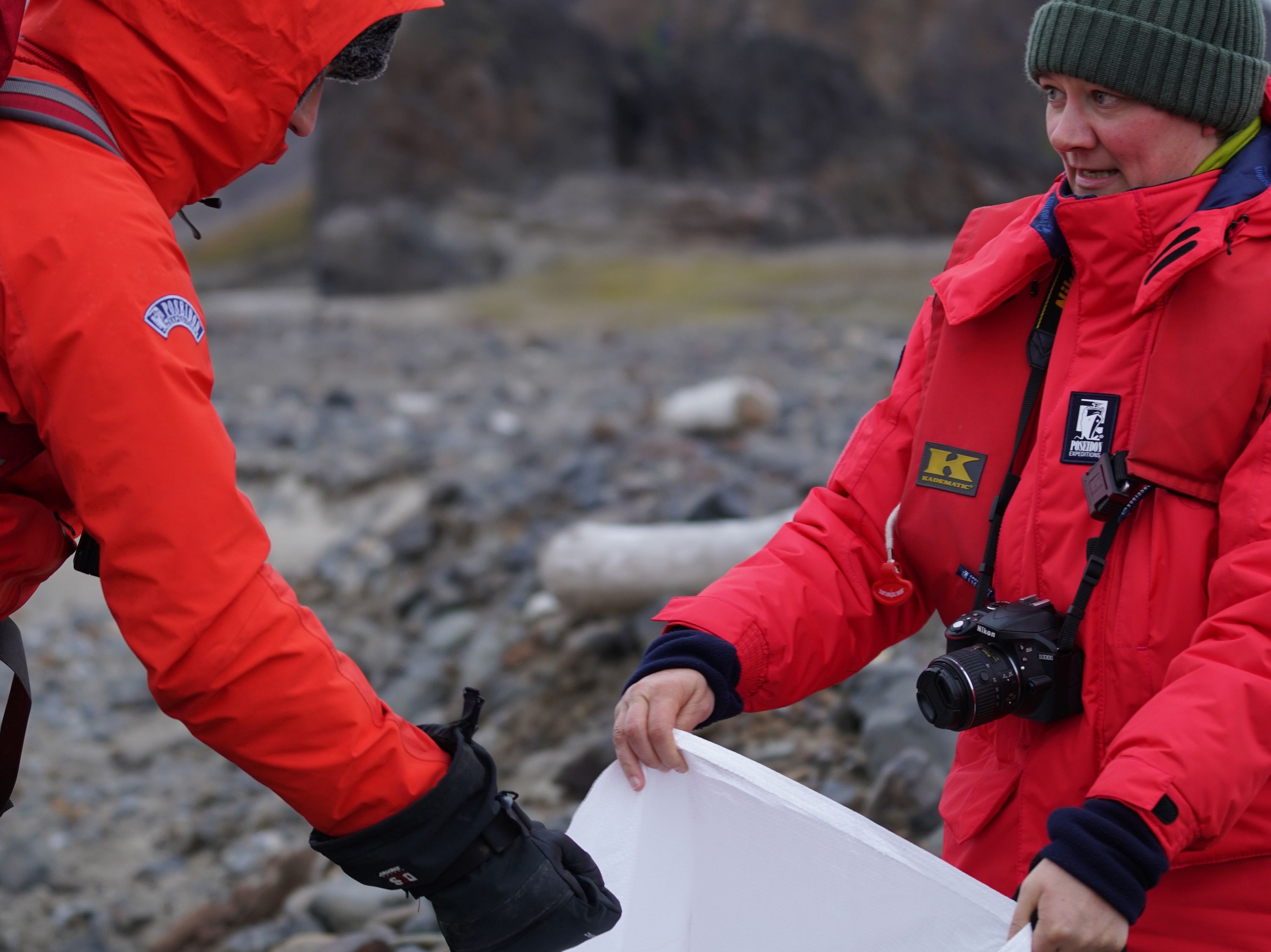
Clean Up Svalbard (Spitzbergen): The winds and ocean currents now carry the waste that enters the oceans to even the most remote regions of the earth. This consists mainly of old nets, ropes, fenders and plastic. The litter not only disturbs the eye of the beholder but is also a threat to wildlife. In order to counteract this and to free the coasts from waste, the initiative «Clean Up Svalbard» was launched. Kontiki Reisen supports the initiative and invites guests to participate.
OceanCare
OceanCare is committed to protecting the oceans and their inhabitants worldwide. Since 2011 as UN Special Advisor on Marine Conservation.
OceanCare
Gerbestrasse 6
8820 Wädenswil
https://www.oceancare.org
To Download
- Norwegen – Whale Watching Guidelines Visit Tromsø, approved by OceanCare and WDC (Whale and Dolphin Conservation)
- Island – Whale Watching Guidelines IceWhale
- Island – Walfreundliche Restaurants
- AECO – Wildlife Guidelines, Cetaceans
- IAATO – Wildlife Guidelines, Cetaceans